The Original Focaccia Barese
with Potato
Durum wheat semolina, boiled potato, hand-crushed cherry tomatoes, Bari olives and extra virgin olive oil. The Bari baker's recipe, step by step.

History in a dough: why the potato is the secret
In Bari, focaccia was never born in the kitchen: it was born in the public ovens of old Bari, where bakers used a piece of leftover dough to test the oven temperature before baking the bread. That "test piece" was seasoned with whatever was around — oil, salt, and later tomatoes once they arrived from the Americas — and handed out to the neighbourhood children.
But the real stroke of genius is the boiled potato in the dough. It is not a modern addition: it is the trick of Bari's humble tradition to keep the focaccia soft all day long. The potato starches retain moisture, countering semolina's natural tendency to harden quickly after baking.
The recipe you'll find here follows the specification of the Focaccia Barese Consortium: durum wheat semolina, hand-crushed cherry tomatoes (not cut), Bari olives, oregano, salt and Apulian extra virgin olive oil. No shortcuts, no all-purpose flour, no non-stick pans.
Ingredients & Method
Step-by-step method
Activate the yeast
Dissolve the yeast in 100 ml of warm water with a pinch of sugar. Let it rest 10 minutes: a foam should form on the surface.
Make the dough
Combine the semolina, the warm mashed boiled potato and the yeast mixture. Gradually add the remaining water. Knead for 10 minutes. Add the salt once the dough has come together, then the EVO oil a little at a time.
First proof
Cover with cling film and let rise at 28°C (82°F) for 2–3 hours until doubled. Alternatively, a slow proof in the fridge overnight.
Prepare the pan
Pour 4–5 generous tablespoons of EVO oil into the black iron pan, spreading it over the base and sides. Don't be stingy: that oil creates the almost "fried", crisp base.
Stretch the dough
Turn the dough into the pan and stretch it with oiled fingers from the centre to the edges. Don't use a rolling pin: your fingertips create the characteristic dimples.
Top it
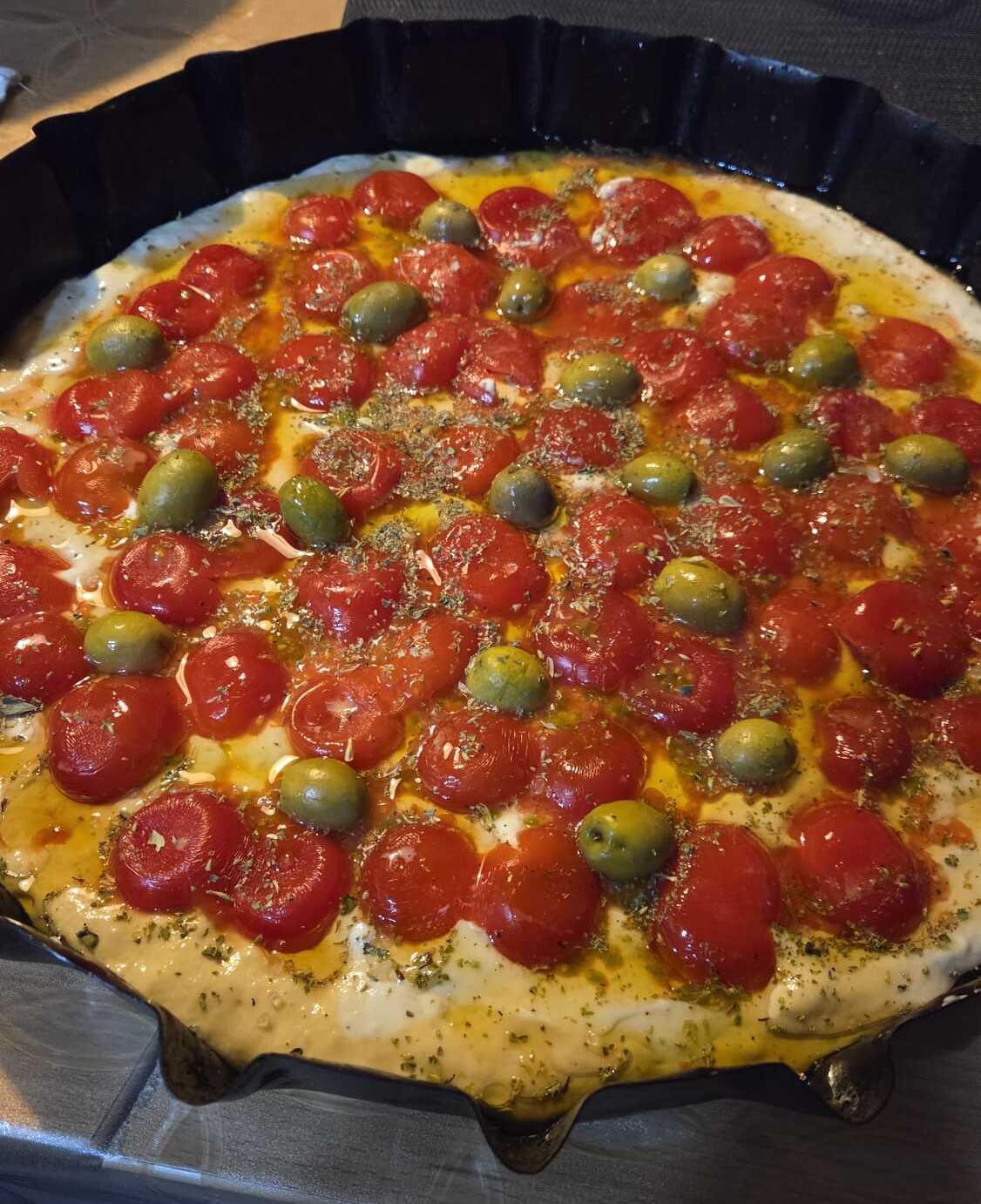
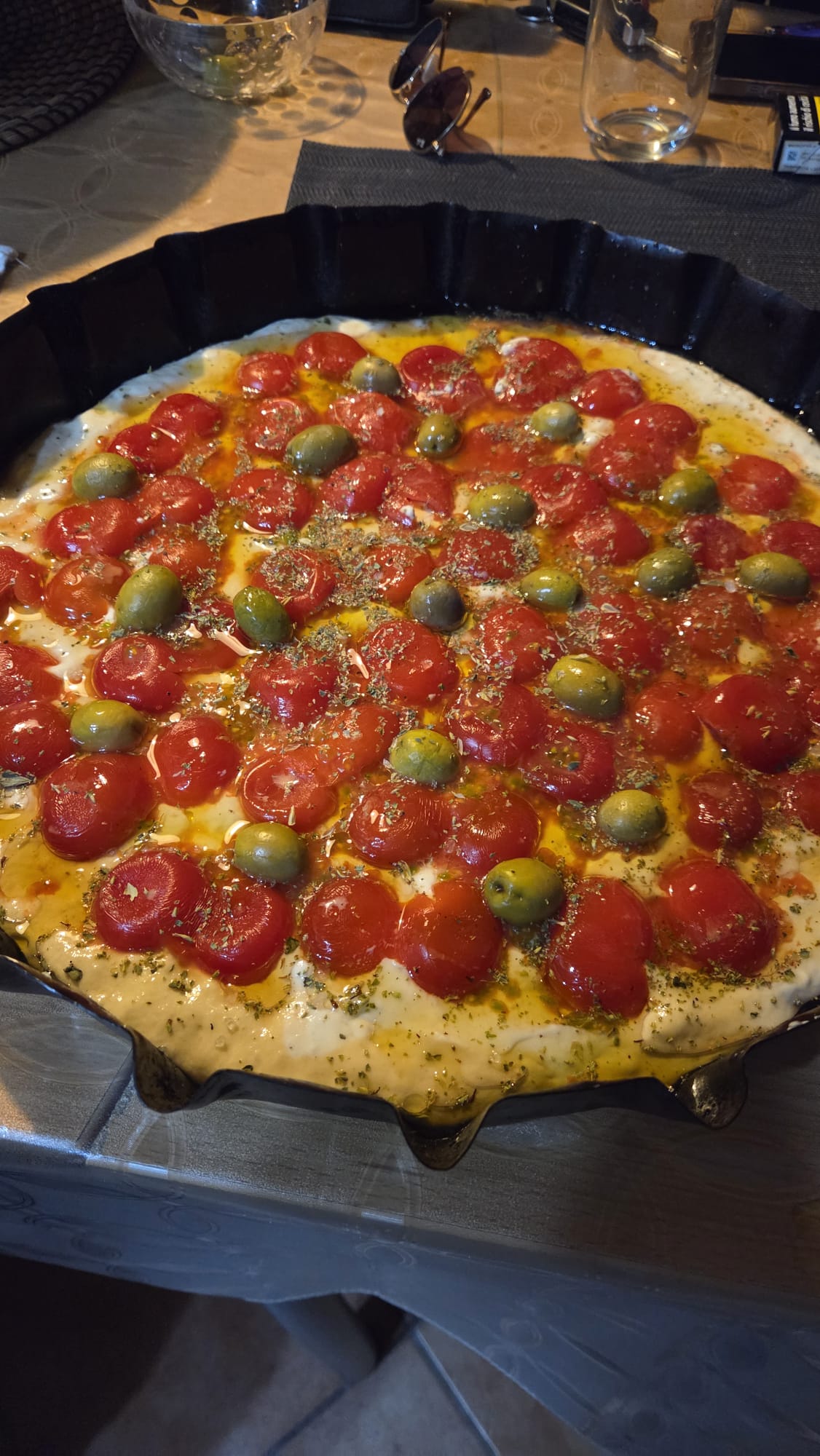
Crush the cherry tomatoes by hand directly onto the dough — don't cut them. Press the olives in. Sprinkle with oregano, coarse salt and a generous swirl of EVO oil.
Second proof
Cover with a cloth and let rest 30–45 minutes at room temperature.
Bake
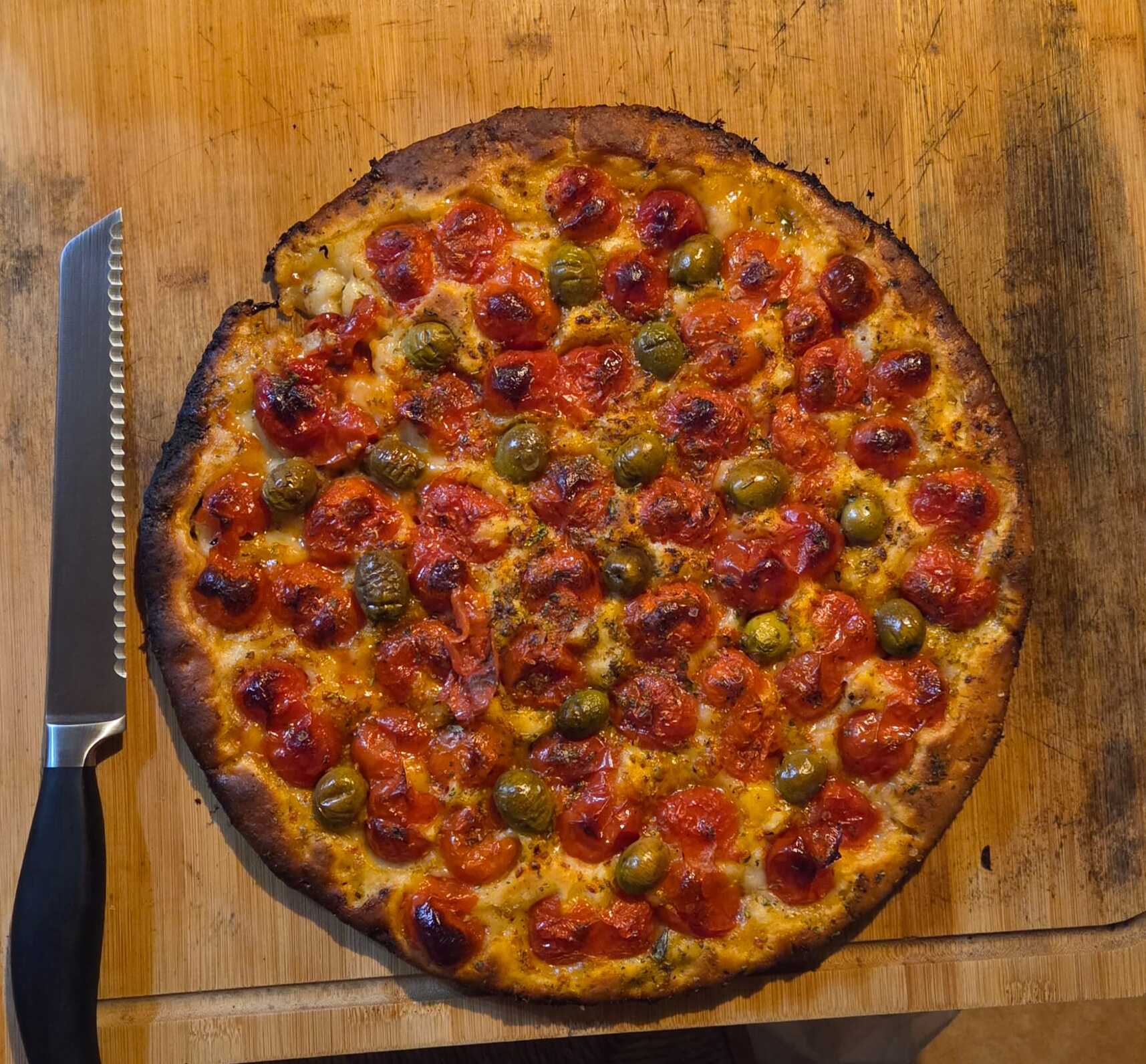
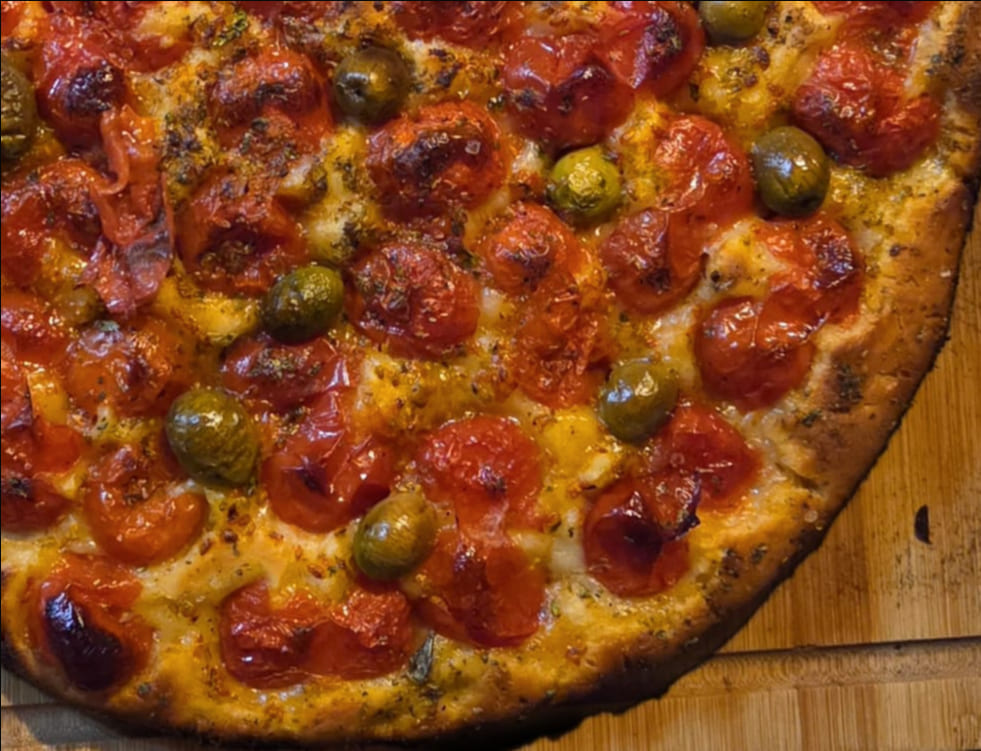
Oven preheated to 220–230°C (430–450°F), conventional, pan on the lower shelf for 25–30 minutes. Move to the middle shelf for the last 5 minutes to brown the surface.
Video Tutorial
Watch the recipe on video
Every visual step is worth a thousand words: dough, stretching, topping and baking in the black iron pan.
The iron pan: before and after the oven
The 6 secrets of perfect focaccia barese
Durum wheat semolina only
No all-purpose flour, no mixes. Durum wheat semolina gives the focaccia its porous structure, amber colour and authentic flavour. It's the TSG specification.
Mash the potato while warm
The boiled potato must be riced while still hot or warm: it incorporates better and releases its starches properly. Cold, it creates lumps.
Plenty of oil in the pan
Don't just grease the pan: pour almost 100 ml across pan and finish. Focaccia barese lightly "fries" from below — that's what creates the crisp base.
Break the tomatoes by hand
Don't cut, don't use a knife. Crush each tomato with your palm: the juice soaks into the raw dough and flavours it throughout baking.
Oven on full, pan low
Bake at 220–230°C (430–450°F), conventional, with the pan on the lowest shelf. Heat from below cooks the base before the surface.
Never wash the pan with soap
The black iron pan should be scraped and oiled, never washed with detergent. Over time it develops a natural non-stick patina that improves flavour.